Climate
Goal
- To utilize machine learning (ML) models that can optimize the cathode synthesis for enhanced discharge capacity, and predict the composition and cycling states of the lithium-ion batteries (LIBs)
- To demonstrate the ability of a convolutional neural network (CNN) model to analyze computationally generated data and make predictions on experimental materials science data
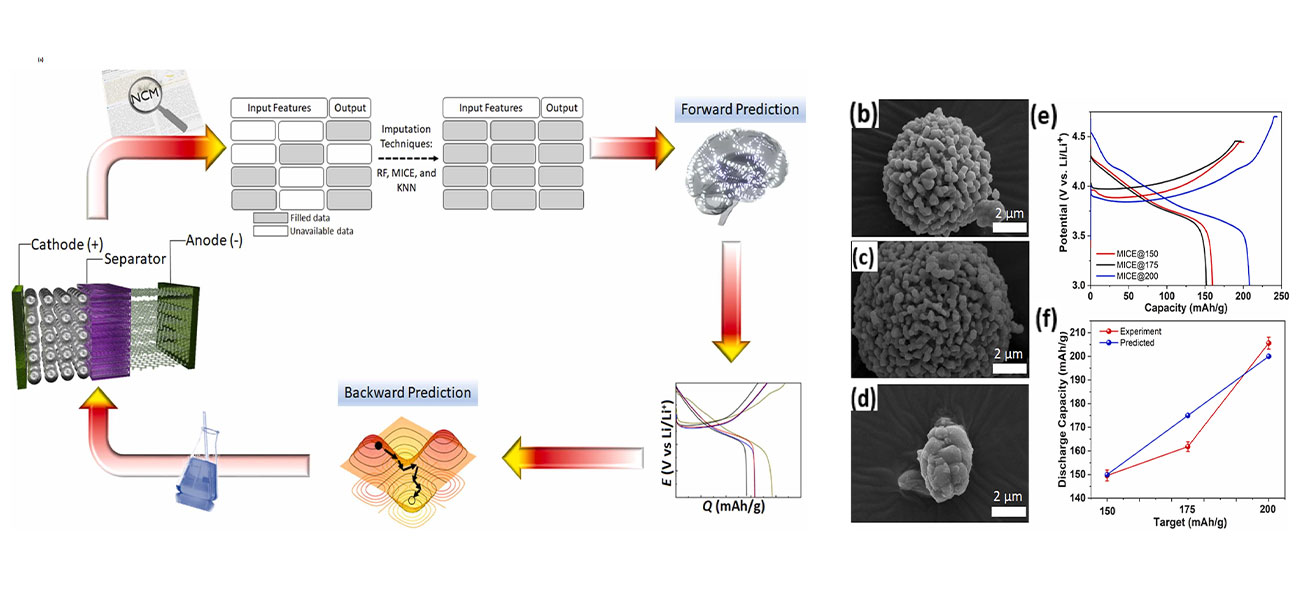
(a) Schematic illustration of three steps of the design-to-device pipeline, (b-d) SEM images based on the prediction of imputed datasets, (e) charge-discharge curves, and (f) comparison between the predicted and experimental target discharge capacity
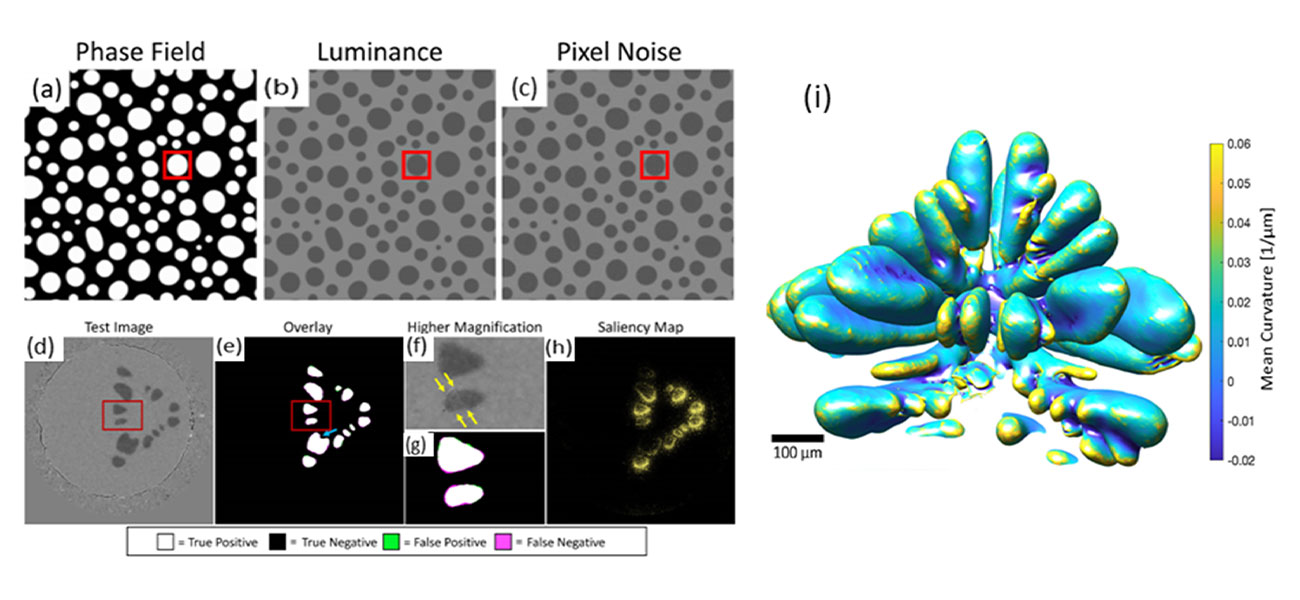
(a) Phase field output and the addition of the (b) luminance (c) pixel noise, (d) XCT test image, (e) associated overlay from the best CNN, (f) higher magnification image of the red box section and (g) associated overlay, (h) saliency map, and (i) 3D visualization of the Aluminum dendritic structure
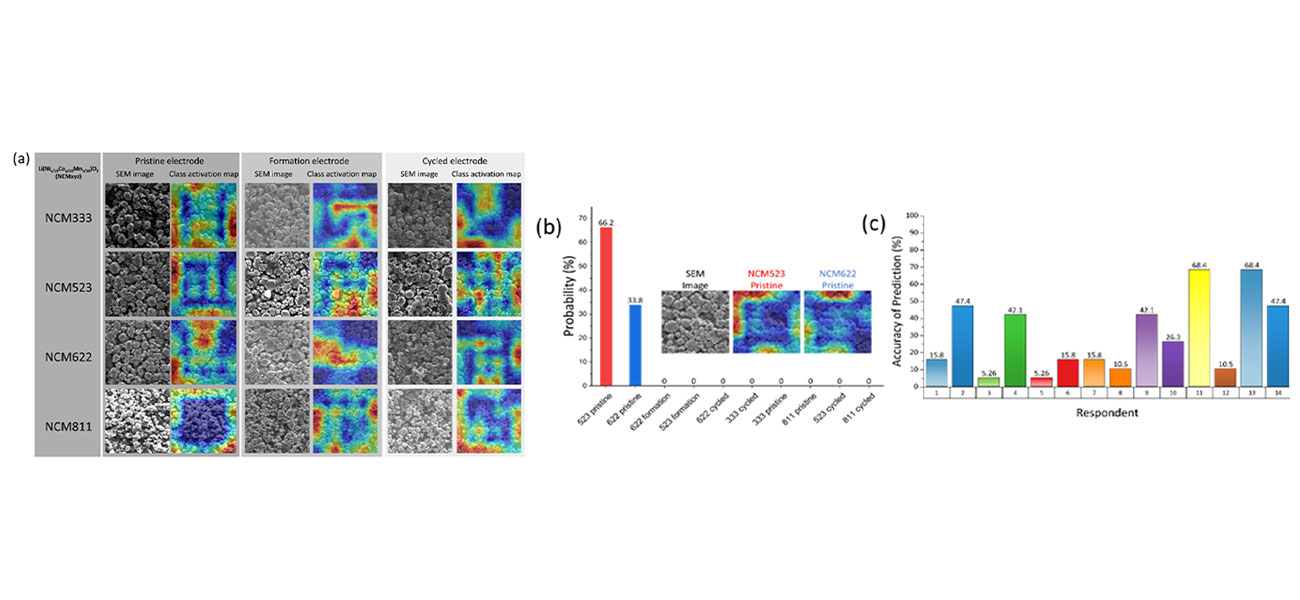
(a) Example images of true cases and their grad-CAM overlays from the best-trained network, (b) probability of each class for the false case and grad-CAM overlays of top-most highest classes, and (c) results of composition and cycling state prediction of SEM images from domain experts
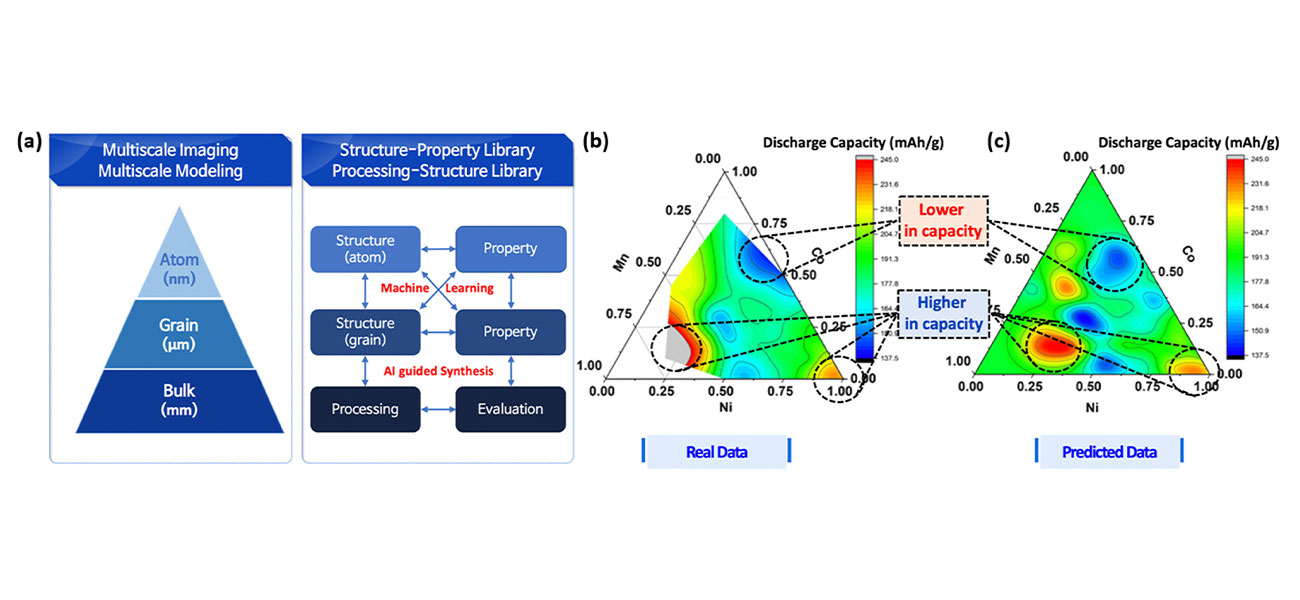
(a) Schematic diagram of the processing–structure-property relationship and materials hierarchy for the M3I3 project, aiming to achieve the seamless integration of the multiscale “structure–property” and “processing–property” relationships. An instance of the M3I3 project research involves predicting the discharge capacity as a function of the composition of lithium-ion battery materials, as shown in Figures (b) and (c) for real and predicted discharge capacities, respectively